In high-risk industrial facilities, such as chemical plants, fuel storage terminals, tank farms, and water treatment sites, fire represents a severe threat. A single incident can endanger lives, cause millions in equipment damage, lead to environmental harm, and result in prolonged operational shutdowns. A dependable fire water storage system is essential, providing the immediate volume, pressure, and flow required for sprinklers, hydrants, monitors, deluge systems, and firefighting pumps, especially when public water supplies may be unavailable, insufficient, or disrupted.
Fire water tank construction plays a vital role in this defence. These dedicated tanks ensure a robust, on-site reserve tailored to the facility’s needs. At Shamrock Engineered Solutions, we deliver comprehensive storage tank solutions for asset-intensive industries, including those handling chemicals, fuels, and water. Our end-to-end services, from inspection and integrity assessments to turnkey design-and-build packages, help clients in these sectors achieve compliance, minimise downtime, reduce costs, and extend asset life.
Why Dedicated Fire Water Storage Is Critical
Facilities with flammable liquids, pressurised systems, or large inventories of hazardous materials face rapid fire escalation risks, including pool fires, jet fires, tank fires, or boil-overs. Sustained high-volume water application is often needed to cool structures, suppress flames, and prevent spread to adjacent areas.
Without sufficient dedicated storage, systems may falter under peak demand. Industry practice calls for reserves sized to support 2– 4 hours of continuous flow at rates suited to the hazard level, often thousands of litres per minute, depending on the installation and risk profile.
Shamrock’s expertise in industrial storage tanks for water, fuel, and chemicals directly supports the development of reliable fire water reserves, optimised for site conditions, materials, and regulatory demands.
Guiding Standards and Compliance
Fire water systems must align with recognised standards to guarantee performance and reliability.
Relevant frameworks include:
- EEMUA 159 guidelines for storage tank inspection and assessment, which Shamrock routinely applies to ensure integrity and longevity.
- Industry-specific requirements for tank design, materials, foundations, and accessories in high-hazard environments.
- Broader compliance with health, safety, and environmental regulations applicable to chemical plants, tank terminals, and water treatment facilities.
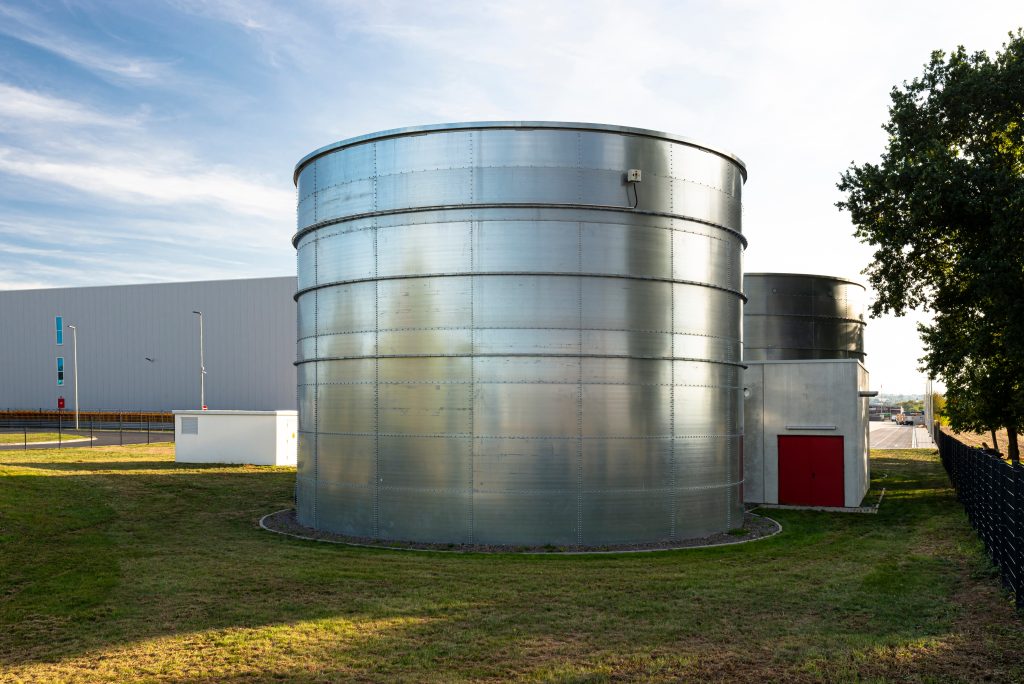
Our turnkey approach incorporates these considerations, delivering tanks engineered for durability, ease of inspection, and operational efficiency, whether above-ground or below-ground configurations best suit the site.
Essential Design Considerations
Robust fire water storage solutions require careful attention to several factors:
1. Capacity and Sizing
Determined by detailed hazard analysis: total demand from protection systems multiplied by required duration. For chemical or fuel sites, this may mean tanks holding hundreds of thousands to millions of litres, often with redundancy to eliminate single points of failure.
2. Tank Types and Materials
- Welded steel for large, seamless volumes and strength, common in tank terminals.
- Bolted or modular options for faster installation and future expansion.
- Protective linings and corrosion safeguards to maintain water quality and structural integrity over time.
3. Tank Foundation Design and Construction
A stable foundation is fundamental. Geotechnical assessment informs the choice of piled, raft, or ring wall designs to counter settlement, seismic, or soil challenges, preventing long-term issues that could affect emergency readiness.
4. Storage Tank Base Construction
Uniform support via sand-bitumen pads, concrete rings, or specialist liners accommodates movement while ensuring no water loss or contamination risks.
5. System Integration
Tanks link to pumps, controls, and distribution networks, incorporating anti-vortex inlets, level monitoring, overflow provisions, and refill mechanisms. Access features support routine inspections and maintenance.
6. Site Placement
Positioning outside primary hazard zones, with appropriate spacing, enhances survivability and accessibility.
Installation, Commissioning, and Lifecycle Support
Our project management consultancy ensures seamless delivery. From initial planning and risk assessment through procurement, construction, and handover, we coordinate civil, mechanical, and other works to minimise disruption, particularly valuable during outage windows.
Shamrock’s single-supplier model for storage tank projects reduces interfaces, accelerates timelines, and maintains focus on safety and compliance. Post-handover, ongoing inspection (to EEMUA 159), maintenance, and repair services keep systems in peak condition, supporting long-term reliability.
The Advantages of a Dependable Solution
- Improved Safety: Rapid, adequate supply helps control incidents effectively, protecting people and assets.
- Compliance and Assurance: Meets regulatory and insurance expectations, potentially reducing premiums.
- Business Continuity: Limits downtime from events or testing interruptions.
- Cost and Asset Value: Durable design and proactive care extend service life while controlling through-life expenses.
In demanding sectors facing evolving risks and standards, a well-engineered fire water storage system is a key investment in resilience.
Working with Shamrock Engineered Solutions
High-risk facilities benefit from partners experienced in industrial storage tanks and critical infrastructure. Shamrock Engineered Solutions provides the technical precision and project efficiency needed, from integrity assessments and maintenance to full turnkey construction, for water storage applications in chemical, fuel, and water treatment environments.
If your site requires reliable fire water storage as part of broader tank or asset management, contact our team. We’re ready to discuss solutions that optimise performance, ensure compliance, and deliver lasting value.